
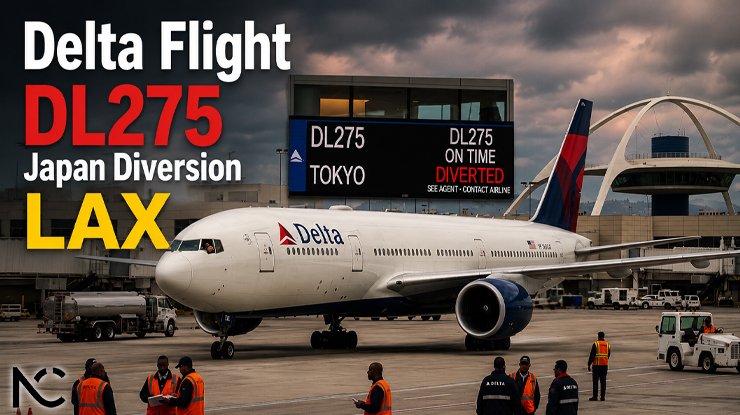
If you were following aviation news in late May 2025, you probably heard about a Delta Air Lines flight that did something quite unusual. A plane left Detroit heading to Tokyo, flew for several hours over the Pacific Ocean, and then turned around and landed in Los Angeles instead. That flight was Delta Flight DL275, and its unexpected stop in California became one of the most talked-about aviation stories of the year.
So what really happened? Why did the pilots change course in the middle of the ocean? And what did passengers go through during all of this? This article covers everything you need to know, in simple and clear language.
What Is Delta Flight DL275?
Delta Flight DL275 is a long international flight operated by Delta Air Lines. It connects Detroit Metropolitan Wayne County Airport (DTW) in Michigan to Tokyo Haneda Airport (HND) in Japan. This is a transpacific route, which means it crosses the Pacific Ocean. The journey usually takes around 13 hours and covers thousands of miles.
Delta uses an Airbus A350-900 for this route. This is one of the most modern long-haul aircraft flying today. The plane is powered by two Rolls-Royce Trent XWB engines. It is designed for long flights over large distances, including routes where the aircraft spends many hours over open water.
The flight normally departs Detroit in the afternoon and arrives in Tokyo the following day. On May 27, 2025, DL275 departed from Detroit Gate A46 a little late due to a delayed inbound aircraft. The plane, registered as N508DN, climbed to its cruising altitude of 38,000 feet and began its journey northwest toward Japan.
When Did the Problem Start?
About five to six hours into the flight, while the aircraft was cruising high above the North Pacific and approximately 620 nautical miles southwest of Anchorage, Alaska, something happened in the cockpit. The monitoring systems picked up a warning signal. The alert was connected to the anti-ice system of one of the Rolls-Royce Trent XWB engines.
The data showed reduced anti-ice flow, rising vibration levels, and small temperature changes that were not normal. The crew could not fully confirm whether the system would continue working safely for the remaining eight-plus hours of cold oceanic flying ahead.
At this point, the captain had to make a decision. Continue to Tokyo, or turn the aircraft around and land somewhere safer?
The captain chose to divert. The nearest major airport with the right maintenance facilities, wide-body aircraft support, and passenger handling services was Los Angeles International Airport, also known as LAX. That is where DL275 headed next.
What Is an Anti-Ice System and Why Does It Matter?
You might be wondering what an anti-ice system actually does and why a problem with it is serious enough to turn a plane around.
When an aircraft flies at high altitude, outside temperatures can drop to very low levels, sometimes well below freezing. Ice can form on critical parts of the engine if this cold air and moisture mix together in the wrong way. Ice forming inside or on the engine can block airflow, change how the engine performs, or cause other serious problems.
The anti-ice system works by heating certain parts of the engine to stop ice from forming. On a flight like DL275, which spends many hours over the cold North Pacific Ocean, this system needs to work properly the whole time. If the system shows signs of failure and the crew cannot confirm it is working correctly, continuing the journey becomes a risk.
In aviation, the general rule is simple: when there is any doubt about a safety-critical system, especially over open water where there are no nearby airports, pilots choose the safest path. That is exactly what the DL275 crew did.
Why Was LAX Chosen as the Diversion Airport?
Some people might wonder why the pilots flew all the way to Los Angeles instead of landing somewhere closer, like Anchorage in Alaska. The answer comes down to several factors.
Los Angeles International Airport is one of the largest and busiest airports in the world. It is a major hub for Delta Air Lines and has all the tools needed for a situation like this. LAX has certified maintenance technicians who can inspect and work on wide-body aircraft like the Airbus A350. It has passenger handling services, hotel support, and rebooking options. It also has long runways designed for large international aircraft.
Anchorage was nearby in distance, but Los Angeles offered far better support for both the aircraft and the passengers. When a flight of this size diverts, the airline needs to care for over 300 passengers, inspect the aircraft, and quickly arrange onward travel. LAX was the right choice for all of those reasons.
The crew also coordinated with air traffic control during the diversion. A priority landing corridor was arranged for DL275, and everything was managed smoothly. The aircraft flew approximately five hours from its diversion point back southeast toward California.
How Did the Flight Land?
On May 28, 2025, at 1:38 AM local time, Delta Flight DL275 touched down safely on Runway 06R at Los Angeles International Airport. The landing was smooth and normal. There were no injuries. There was no fire, no visible smoke, and no emergency alarms going off during the landing.
The total flight time from departure to landing at LAX was about 12 hours and 15 minutes. In a strange twist, this was nearly as long as a normal Detroit-to-Tokyo flight, except the plane ended up back on the US West Coast instead of Japan.
Once on the ground, maintenance technicians immediately began inspecting the aircraft. The plane, N508DN, remained on the ground in Los Angeles for around 18.5 hours before returning to service.
What Happened to the Passengers?
There were 306 passengers on board Delta Flight DL275. For them, this night was exhausting and confusing. They had boarded expecting a long but routine flight to Japan. Instead, they found themselves landing in Los Angeles in the early hours of the morning.
During the diversion, the cabin crew kept passengers informed. Announcements were made explaining the situation. The crew remained calm throughout, and there was no panic on board.
After landing, Delta Air Lines took care of the passengers. This included helping everyone with rebooking on other flights to Tokyo Haneda. Some passengers received hotel accommodations. Meals and vouchers were also provided where needed. Passengers whose plans were disrupted due to a technical issue within the airline’s control are generally entitled to this kind of support under airline industry standards.
Missing connections, rescheduled meetings, and changed plans were real problems for many travelers that day. Those disruptions were genuine and frustrating. But all 306 passengers arrived safely, which is what matters most.
Was There a Formal Investigation?
After the aircraft was inspected and the diversion was confirmed as precautionary, Delta Air Lines submitted standard Aviation Safety Action Program documentation, which is required whenever an in-flight system alert occurs. This is a normal part of aviation reporting.
However, no formal investigation was opened by the National Transportation Safety Board (NTSB). That is because the NTSB only opens an investigation when an actual accident occurs, meaning there must be damage to the aircraft, injury to a passenger or crew member, or a serious incident that meets specific legal thresholds. The DL275 diversion did not meet that level. No damage was found on the aircraft. No one was hurt. The landing was completely safe.
The FAA also does not routinely issue public reports for precautionary diversions when there is no injury or damage involved. Delta’s maintenance team handled the inspection and cleared the aircraft to return to service.
What Did the Diversion Cost?
A diversion of this size is not cheap. The costs add up quickly when you consider extra fuel for the return journey, maintenance inspection fees at LAX, passenger hotel stays and meal vouchers, the cancelled Tokyo leg of the flight, and the knock-on effects for the airline’s wider schedule. Estimates suggest the total cost of the DL275 diversion, including 72 hours of schedule disruption across the network, could have been somewhere between two and six million dollars. That is a significant amount, but airlines treat these costs as a normal part of running safe operations.
Is Delta Flight DL275 Still Operating?
Yes. As of early 2026, Delta Flight DL275 continues to operate the Detroit to Tokyo Haneda route on its regular daily schedule. No further diversions have been reported on this route. The aircraft returned to service without any recurring issues.
This is an important detail for travelers who might feel nervous after hearing about the incident. The diversion was a one-time precautionary event. The problem was identified, the plane was checked by certified professionals, and the route continues safely.
What Can We Learn From the DL275 Diversion?
The DL275 story is not really about what went wrong. It is about what went right. Modern aircraft are equipped with advanced monitoring systems that can detect tiny problems early, long before they become serious. The Airbus A350 picked up a sensor anomaly in its anti-ice system and sent a warning to the crew. The crew followed their training, evaluated the situation carefully, and made a conservative decision to divert.
That chain of events, from sensor to cockpit to decision, is exactly how aviation safety is supposed to work. Pilots are trained to be cautious, especially over large bodies of water where options are limited. The culture in modern aviation is to always choose safety over schedule, even when it costs time, money, and convenience.
For travelers, this event is actually quite reassuring. Flight diversions are rarely signs of danger. More often, they are signs that safety systems are doing their job. When a crew diverts a flight due to a technical concern, it means the monitoring worked, the decision-making was sound, and the system protected everyone on board.
Conclusion
The diversion of Delta Flight DL275 in May 2025 shows how modern aviation safety systems are designed to protect passengers long before a small issue becomes a serious problem. What started as a routine flight from Delta Air Lines Detroit to Tokyo quickly became a major aviation story after the crew detected unusual readings linked to the aircraft’s engine anti-ice system. Instead of taking unnecessary risks over the Pacific Ocean, the pilots followed safety procedures and safely diverted the Airbus A350 to Los Angeles International Airport.
Even though the diversion caused delays, missed connections, and extra costs for the airline, the most important outcome was clear: every passenger and crew member landed safely. The incident also highlighted how advanced aircraft technology, careful pilot training, and strong airline support systems work together during unexpected situations.
10 Frequently Asked Questions About Delta Flight DL275 Japan Diversion LAX
1. When did the Delta Flight DL275 diversion happen? The diversion happened on May 27 and 28, 2025. The plane departed Detroit on May 27 and landed at LAX in the early hours of May 28, 2025, at 1:38 AM local time.
2. Why did Delta Flight DL275 divert to LAX? The pilots detected a warning in the anti-ice system of one of the Rolls-Royce Trent XWB engines. The sensor data showed reduced anti-ice flow, rising vibration, and temperature changes. Because the crew could not confirm the system would hold safely for the rest of the ocean crossing, they diverted to LAX as a precaution.
3. What type of aircraft was used for the flight? The flight used an Airbus A350-900, registered as N508DN. This is a wide-body, long-haul aircraft powered by two Rolls-Royce Trent XWB engines.
4. How many passengers were on board? There were 306 passengers on board Delta Flight DL275 when it diverted to LAX.
5. Were any passengers or crew members injured? No. Zero injuries were reported. All 306 passengers and crew members arrived safely at Los Angeles International Airport.
6. Why was LAX chosen instead of Anchorage? LAX offered better support for both the aircraft and the passengers. It has certified maintenance facilities for wide-body aircraft like the A350, full passenger handling services, hotel support, and rebooking options. These resources made LAX the most practical choice for a diversion of this scale.
7. Did the NTSB open a formal investigation? No. Because the diversion was precautionary and involved no injuries, no damage, and no confirmed system failure, the NTSB did not open a formal accident investigation. Delta submitted standard safety reporting documentation as required.
8. How long did the aircraft stay at LAX? The aircraft remained grounded at Los Angeles International Airport for approximately 18.5 hours while maintenance technicians inspected and cleared it for return to service.
9. What did Delta do for the passengers after the diversion? Delta Air Lines rebooked all affected passengers on alternative flights to Tokyo Haneda. The airline also provided hotel accommodations, meals, and other support for those whose travel plans were disrupted by the unplanned stop.
10. Is Delta Flight DL275 still flying today? Yes. As of early 2026, Delta Flight DL275 continues to operate the daily Detroit to Tokyo Haneda route without any further reported diversions. The flight returned to its normal schedule after the aircraft was inspected and cleared at LAX.
Click for more amazing info. News Cora
