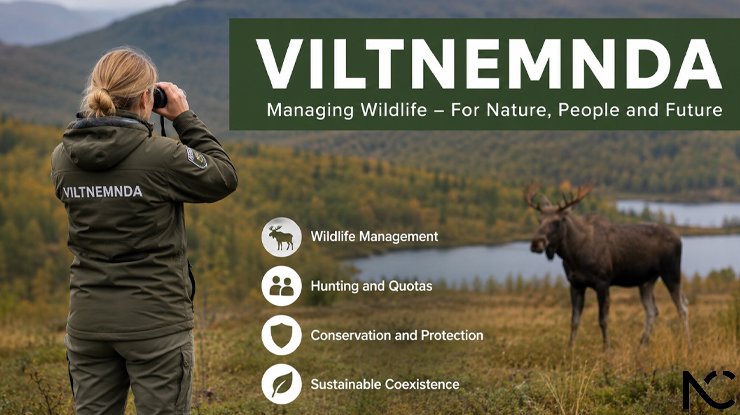
Norway has many forests, mountains, and open fields. Wild animals like moose, deer, and roe deer live in these areas. People also live, farm, and drive cars in the same places. So how does Norway keep a good balance between nature and people? Part of the answer is a local system called Viltnemnda.
What Does “Viltnemnda” Mean?
The word Viltnemnda comes from two Norwegian words: “vilt,” which means wildlife or game, and “nemnda,” which means committee or board. Together, the word means “the wildlife committee” or “the wildlife board.”
Viltnemnda is a local group found in many Norwegian municipalities, called “kommune” in Norwegian. Each municipality can set up its own wildlife board. This board takes care of wildlife matters in that local area.
Why Does Norway Need Viltnemnda?
In Norway, wild animals belong to the state, not to private people. This means no one person owns the animals living on their land. Because of this, the country needs a fair system to manage hunting, protect animals, and solve problems between people and wildlife.
National laws set the big rules, but local conditions are very different across Norway. A coastal town has different wildlife needs than a town in the mountains or in the forest. This is why Norway gives power to local boards. They understand their own area better than someone working far away in the capital.
A Short History
Local wildlife management in Norway is not a new idea. For many years, small communities managed shared natural resources together. But the modern Viltnemnda system became official with the Wildlife Act of 1981, called “Viltloven” in Norwegian. This law gave each municipality the duty to manage wildlife and hunting in their area.
Later, the Nature Diversity Act of 2009 added more focus on protecting nature and using a careful, science based approach. Over time, more scientific knowledge and data have been added to help these local boards make better decisions.
Who Sits on a Viltnemnda?
Members of a Viltnemnda are usually chosen by the local municipal council. A typical board has a small number of members, often around five, plus some deputy members. These people often come from different backgrounds, such as:
- Hunters who know the land and animal behavior
- Farmers who deal with crop damage from animals
- Environmental experts or biologists
- Local landowners
This mix of people helps the board make decisions that consider both nature and the needs of the community.
What Does Viltnemnda Actually Do?
The daily work of Viltnemnda covers several important tasks. Here are the main ones.
1. Setting hunting quotas
Animals like moose, red deer, and roe deer can grow in number quickly. If there are too many animals, they can damage young forests and farm crops. The board studies population data and sets limits on how many animals hunters can take each year. This is often part of a longer plan called a “bestandsplan,” or population plan.
2. Approving hunting permits
Hunters need permission before they can hunt in a certain area. Viltnemnda reviews and approves these hunting permits and hunting zones.
3. Responding to wildlife and car accidents
Norway has many roads that cross through forests and open land. Because of this, cars sometimes hit animals like moose or deer. When this happens, drivers must report the accident to the police. The police then contact the local Viltnemnda. The board sends trained people, sometimes with tracking dogs, to find the injured animal. If needed, they end the animal’s suffering in a humane way.
4. Giving advice to the local government
When a municipality plans a new road or housing area, Viltnemnda can give advice. They help protect important wildlife paths, feeding areas, and nesting places so new buildings do not harm these spots too much.
5. Helping with conflicts between farms and wildlife
If animals damage crops or attack farm animals, Viltnemnda may help find solutions, such as changing hunting quotas or suggesting protective measures.
How Does Viltnemnda Fit Into the Bigger System?
Viltnemnda does not work alone. National laws come from the Ministry of Climate and Environment and the Ministry of Agriculture and Food. Regional offices, led by the County Governor, called “Statsforvalteren,” check that local decisions follow national rules. Viltnemnda sits at the bottom of this system, but it does the real, practical work on the ground.
This structure means decisions are made by the people who know the local land best, while still following the bigger national goals for nature protection.
Some Challenges
Like any system, Viltnemnda faces some problems. Some municipalities do not have enough money, staff, or equipment to do the job well. Some local people do not know that Viltnemnda exists or that they should report animal accidents. There are also discussions about whether boards should include more people who are not hunters, to bring different points of view.
Climate change is another growing challenge. Animal migration patterns and forest conditions are changing, and Viltnemnda must adjust its plans to keep up with these changes.
Why Viltnemnda Matters
Viltnemnda shows how Norway tries to balance nature, safety, and tradition. Instead of one big office making all the rules, local people with real experience help guide decisions about wildlife in their own area. This system protects animals, supports hunters and farmers, and keeps roads safer for drivers.
It is a good example of how local knowledge and national law can work together to protect a country’s natural beauty for the future.
Frequently Asked Questions
1. What is Viltnemnda in simple words?
Viltnemnda is a local wildlife committee found in Norwegian municipalities. It manages hunting quotas, handles wildlife accidents, and gives advice on protecting animals and their habitats.
2. Who chooses the members of Viltnemnda?
The local municipal council appoints the members. They usually include hunters, farmers, and people with knowledge of nature or wildlife.
3. What happens if a car hits an animal in Norway?
The driver must report the accident to the police. The police then inform the local Viltnemnda, which sends trained people to find and help the injured animal.
4. What laws guide the work of Viltnemnda?
The main laws are the Wildlife Act (Viltloven) from 1981 and the Nature Diversity Act from 2009. These laws set the national rules that local boards must follow.
5. Why does Norway use local boards instead of one national system?
Norway’s land is very different from place to place. Local boards understand their own area’s wildlife and people better, so they can make more practical and fair decisions than a single office far away.
Click for more amazing info. News Cora
