
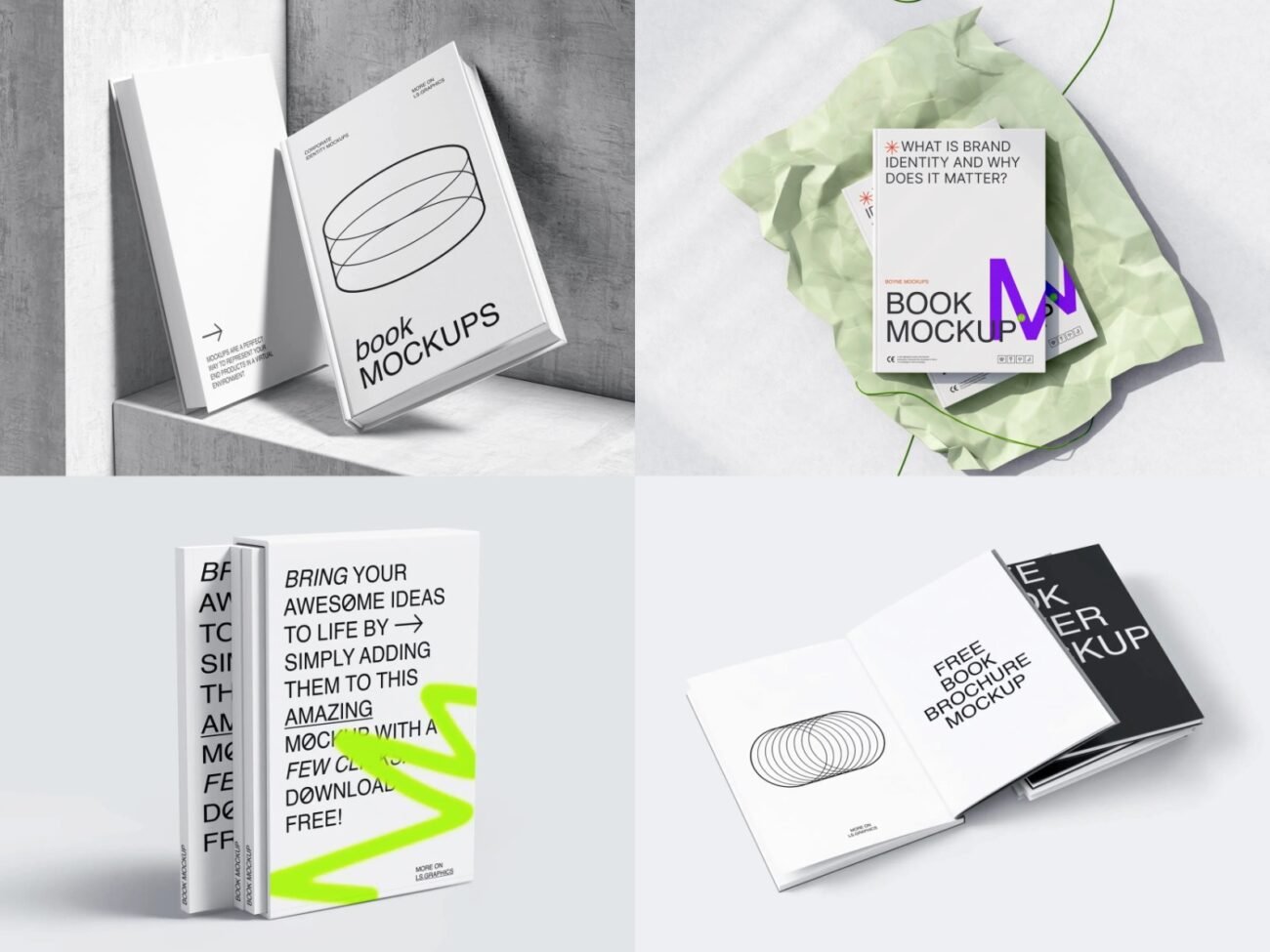
You’ve written something worth sharing. Now comes the question nobody warned you about: how do you show it to the world in a way that actually stops the scroll?
Whether you’re an indie author, a digital marketer, or a publisher launching a new title, the visual presentation of your book is no longer secondary — it’s the campaign itself. And the debate between ebook mockups and print book visuals is more nuanced than most creators realize.
Why Visuals Matter More Than Ever
Social media is a visual-first environment. On Instagram, Pinterest, and even LinkedIn, the image does the heavy lifting before a single word of caption is read. Readers don’t just buy books — they buy the feeling of owning them.
This is where mockups enter the story.
A Book mockup is a pre-built visual template that lets you place your cover design into a photorealistic scene — a coffee table, a linen bedspread, a minimalist desk — without owning a single physical copy. It’s fast, cost-effective, and surprisingly powerful.
The Case for Ebook Mockups
Ebook mockups typically feature tablets, e-readers, or floating digital screens styled in clean, modern environments. They signal: this is digital, instant, accessible.
On platforms like Instagram and Facebook, ebook mockups tend to perform well for:
- Digital-native audiences who prefer immediate downloads
- Lead magnet promotions where a free ebook is the hook
- Tech, business, and self-development niches where the audience already lives online
The flat, device-based aesthetic also fits perfectly into Stories and carousel formats — bite-sized, swipeable, clean.
The Case for Print Book Visuals
There’s something deeply compelling about a physical book. The texture implied by a matte cover, the shadow that falls across a hardback spine — these details trigger a tactile memory in the viewer’s brain.
Print book mockups communicate authority. They say: this was worth printing. For fiction, children’s books, cookbooks, and premium non-fiction, that perception matters enormously.
On Pinterest especially, lifestyle-oriented print book imagery consistently outperforms device-based ebook visuals in saves and click-throughs. The reason is simple: people pin aspirational content, and a beautifully staged hardcover on a warm wooden surface feels aspirational.
Real-World Use Cases: Mockups in Practice
Creators across industries have put book mockups to work in remarkably practical ways:
- A self-published business coach used a clean hardcover mockup in her Facebook ad campaign — no physical book existed yet — and pre-sold 340 copies before the print run began.
- An indie fantasy author staged her paperback cover in multiple seasonal mockup scenes and rotated them across Instagram monthly, maintaining feed variety without a single new photoshoot.
- A marketing agency created a downloadable ebook guide for a SaaS client and used a tablet mockup in email headers, increasing open-to-click rates by 22% compared to text-only headers.
These aren’t edge cases. They’re standard practice among creators who understand that presentation is part of the product.
Book Mockups on ls.graphics
If you’re serious about visual quality, ls.graphics deserves a dedicated look. Their book mockup collection stands out for premium craftsmanship: ultra-realistic rendering with natural lighting, depth, and shadow that’s genuinely hard to distinguish from photography.
Each file comes with organized layers, making customization intuitive even for non-designers. You get multiple angles and perspectives, various color styles, and stylish minimalistic compositions that feel editorial rather than generic. The Edit Online feature lets you apply your cover without opening Photoshop at all — a genuine time-saver. And for those testing the waters, there’s a generous library of free scenes available to explore before committing.
So Which Actually Wins?
Honestly? Neither format dominates universally. The better question is: who is your reader, and where do they live online?
If your audience scrolls Pinterest boards for cozy reading recommendations, a beautifully staged print mockup will outperform every device visual you create. If they follow productivity influencers on LinkedIn and download resources weekly, a crisp tablet mockup speaks their language.
The smartest creators don’t choose — they test both, track engagement, and let the data guide the budget.
Conclusion
The ebook vs. print book debate is really a question about audience psychology. Both formats have proven social media value; the difference lies in context, niche, and platform culture. What unites both approaches is the need for quality visuals — because a blurry, amateur mockup hurts your credibility regardless of the format it represents. Resources like ls.graphics exist precisely to close that gap, giving independent creators access to the same visual standards that traditional publishers take for granted. Invest in how your book looks before it’s even read.
