
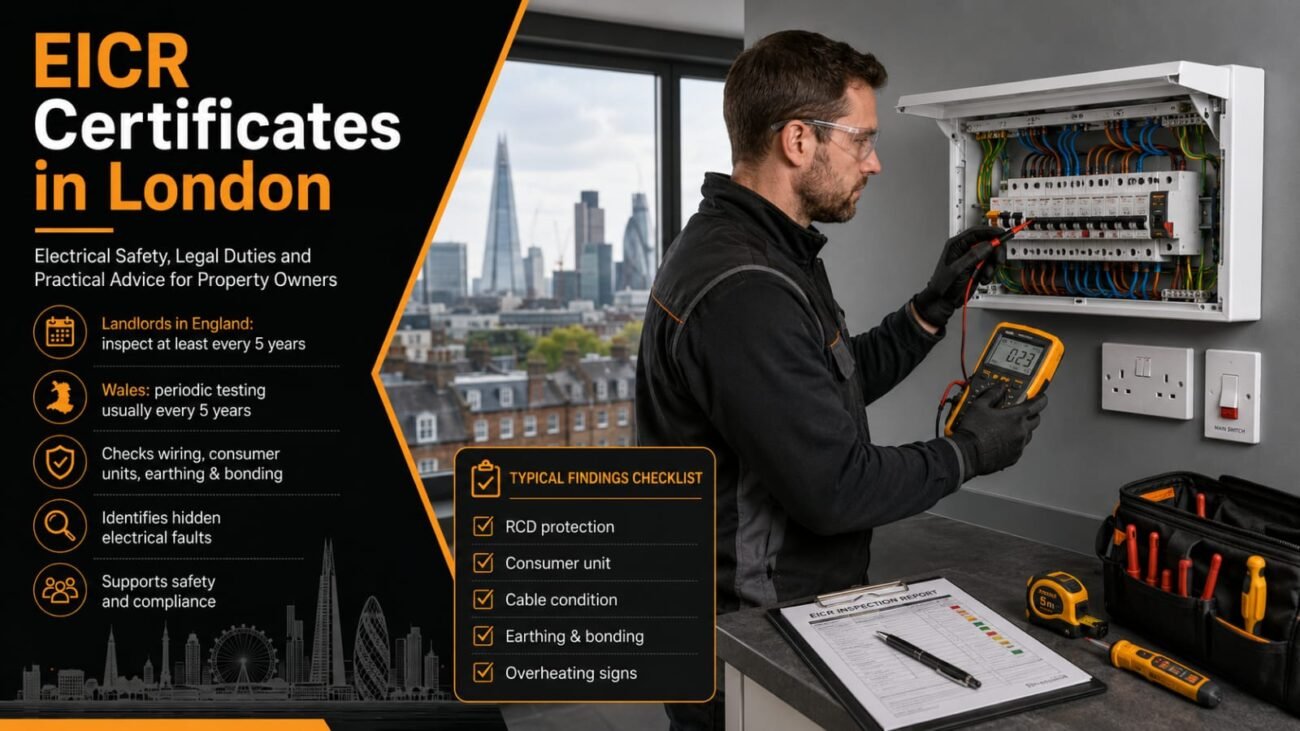
Understand EICR certificates in London, including landlord duties in England and Wales, inspection codes, common defects, costs and practical electrical safety guidance.
A Practical Introduction to EICR Certificates
Complete Electrical Safety Guide for Landlords & Homeowners explains why electrical safety testing should never be treated as a simple box-ticking exercise. A property can look perfectly normal on the surface while hidden faults remain inside consumer units, cables, sockets, lighting circuits and protective devices. Lights may still switch on and sockets may still supply power, yet the installation may be ageing, overloaded or unsuitable for modern electrical demand.
For landlords, EICR testing is closely linked to legal duties. In England, rented homes must have electrical installations inspected and tested by a qualified person at least every five years. In Wales, rented homes also require periodic inspection and testing, normally at least every five years unless the previous report sets a shorter interval. For homeowners, an EICR may not be required on the same fixed legal cycle, but it remains one of the clearest ways to understand the condition of the fixed electrical system.
London properties often carry additional complexity because the housing stock is so varied. A modern apartment, Victorian terrace, converted flat, older mansion block, HMO and mixed-use building can all present very different electrical risks. Many properties have been altered, refurbished or extended several times, sometimes with incomplete records of previous electrical work.
What an EICR Actually Checks
An Electrical Installation Condition Report is a structured inspection and test of the fixed electrical installation. It does not test movable appliances such as kettles, televisions, lamps or chargers. Instead, it focuses on the permanent wiring and electrical infrastructure serving the property.
During the inspection, the electrician assesses whether the installation is safe for continued use. This includes visual checks and electrical testing to identify deterioration, damage, missing protection, unsafe alterations, poor workmanship or signs that circuits may not be suitable for the way the property is being used.
An EICR may include checks on:
- Consumer units and distribution boards
- Socket and lighting circuits
- Earthing and bonding arrangements
- RCD and RCBO protection
- Cable condition and insulation resistance
- Circuit continuity and polarity
- Signs of overheating or loose connections
- Previous alterations and possible DIY electrical work
At the end of the inspection, the report will normally be marked satisfactory or unsatisfactory. A satisfactory outcome means the installation was considered safe for continued use at the time of inspection. An unsatisfactory result means remedial work or further investigation is needed.
Why London Properties Benefit from Periodic Electrical Testing
Electrical faults are often hidden. A socket can appear to work while the termination behind it is loose. A consumer unit can look tidy while circuits lack suitable modern protection. A cable may remain concealed inside a wall long after its insulation has deteriorated. This is why relying only on visible condition is risky.
In London, older homes and converted properties are particularly likely to have installations that were changed in stages. Extra sockets may have been added for modern living, kitchens may have been rewired separately, extensions may have introduced new circuits, and old lighting circuits may still remain in service. Without testing, it can be difficult to understand how safe and reliable the whole installation really is.
Routine EICR testing can help reduce the risk of electrical fires, electric shock, circuit overloads, nuisance tripping, insurance complications, compliance problems and expensive emergency repairs. It also gives landlords and homeowners a clearer plan for future upgrades.
EICR Responsibilities in England and Wales
The legal position depends on the type of property and how it is occupied. Landlords have stronger and more specific duties than owner-occupiers. In England, landlords must ensure that electrical installations in rented properties are inspected and tested by a properly qualified person at least every five years. They must provide the report to tenants where required and complete remedial works when dangerous or potentially dangerous defects are identified.
In Wales, rented homes must also have a valid electrical condition report. Welsh guidance explains that electrical installations should be tested at least every five years unless the report recommends a shorter testing interval. Landlords should keep evidence of inspection and any remedial work completed.
For owner-occupied homes, an EICR is usually recommended rather than legally required on a fixed five-year cycle. Homeowners may arrange one when buying a property, selling a property, planning renovation, experiencing electrical problems or living in an older home where the wiring history is unclear.
When Homeowners Should Consider an EICR
Homeowners sometimes assume EICRs are only for landlords, but this is not the case. An EICR can be useful whenever there is uncertainty about the condition of the electrical installation.
A homeowner should consider electrical inspection if the property is older, the wiring history is unknown, the consumer unit looks outdated, circuits trip repeatedly, lights flicker, sockets feel warm, burning smells are noticed or renovation work is planned. It is also sensible before major upgrades such as a new kitchen, bathroom, extension, loft conversion or EV charging installation.
An EICR can show whether only minor improvements are needed or whether more serious issues such as damaged wiring, poor bonding, unsafe alterations or outdated protective devices require attention.
EICRs During Property Purchases and Sales
An EICR can be especially valuable during a property transaction. In a standard owner-occupied sale, the seller is not usually automatically required to provide a new EICR. However, a buyer may request one as part of due diligence, particularly where the property is old, visibly altered, previously rented or lacks electrical documentation.
For buyers, arranging an inspection before exchange can prevent expensive surprises after completion. For sellers, providing a recent satisfactory report may help reduce uncertainty and reassure potential buyers. If the report identifies serious defects, the findings may influence negotiations, repair requests or post-completion budgeting.
This does not mean every property sale requires the seller to commission a report. It means electrical condition should be considered before a buyer becomes legally committed, especially where the installation appears old or has an unclear history.
Common Defects Found During EICR Inspections
Many EICR issues are linked to age, wear, previous alterations or increased modern electrical demand. Some defects are simple to correct, while others point to wider installation problems.
Common findings include:
- Old fuse boards or outdated consumer units
- No suitable RCD or RCBO protection
- Damaged cable insulation
- Loose electrical connections
- Overloaded circuits
- Poor earthing or bonding
- Broken sockets and switches
- Signs of overheating
- Exposed live parts
- Unsafe DIY additions
- Circuits not suitable for current demand
Older London properties may also contain mixed wiring ages, hidden junction boxes, previous alterations without certification or circuits that were never designed for today’s appliance use. These issues are often invisible until proper inspection and testing is carried out.
Typical EICR Defects and Recommended Actions
| Electrical Issue | Potential Risk | Typical Action |
| Old fuse board | Fire or shock risk | Consumer unit upgrade |
| No RCD protection | Reduced fault protection | Install suitable RCD/RCBO protection |
| Damaged wiring | Overheating or electric shock | Repair or rewiring assessment |
| Loose connections | Sparking and fire risk | Professional electrical repair |
| Poor earthing | Unsafe fault clearance | Earthing and bonding improvement |
| Unsafe DIY work | Unknown safety standard | Inspection, correction and testing |
Understanding EICR Observation Codes
EICR reports use observation codes to explain the seriousness of each issue. Understanding these codes helps property owners decide what must be repaired urgently and what may be considered an improvement.
- C1 means danger is present and immediate action is required.
- C2 means a potentially dangerous condition exists and urgent remedial work is required.
- C3 means improvement is recommended but the report may still be satisfactory.
- FI means further investigation is needed because safety cannot be confirmed without additional checks.
A report containing C1, C2 or FI observations will normally be unsatisfactory. The installation should not be treated as safe for continued use until the required remedial work or investigation has been completed.
How Often Should EICR Testing Be Arranged?
Inspection intervals depend on property type, usage, condition and previous report recommendations. For private rented homes in England, the normal maximum interval is five years. In Wales, rented homes also normally require inspection and testing every five years unless a shorter interval is stated. Owner-occupied homes are often inspected around every ten years, although older properties or homes with warning signs may need testing sooner.
Commercial premises should be assessed based on risk, use and environment. Offices, retail units, restaurants, workshops and industrial premises may all require different inspection frequencies. Additional testing may also be needed after flooding, fire damage, major renovation, consumer unit replacement, significant electrical alterations or long vacancy periods.
What Affects EICR Cost in London?
EICR Certificate in London costs vary because no two properties are exactly the same. A small flat with one consumer unit and a limited number of circuits will usually be quicker to inspect than a large house, HMO or commercial building with multiple distribution boards.
Pricing may depend on the number of circuits, number of consumer units, property age, accessibility, urgency, parking, whether circuits are labelled and whether further investigation is needed. Property owners should be careful with extremely cheap inspections, because accurate testing requires time, suitable equipment and proper reporting.
EICRs and Part P Electrical Work
For domestic electrical work in England and Wales, Building Regulations Part P is an important consideration. It relates to the safety of electrical installations in dwellings and covers safe design, installation, inspection and testing. Certain work may need notification to building control or completion by a registered competent person.
An EICR is not the same as an Electrical Installation Certificate for new work. An EICR assesses the condition of the existing installation, while new electrical installation work should be certified when it is carried out. Keeping certificates is useful for future inspections, sales, insurance queries and landlord compliance records.
Choosing a Qualified EICR Electrician
Electrician in London should be competent, properly qualified and experienced in inspection and testing. The quality of an EICR depends not only on the test equipment used, but also on the electrician’s judgement, knowledge of BS 7671 and ability to explain observations clearly.
A reliable professional should provide a clear written report, explain C1, C2, C3 and FI observations, offer transparent pricing, understand landlord compliance, be familiar with London property types and recommend practical remedial action where needed.
This article is also very useful if you want to understand how electricians identify hidden faults before they become serious safety problems: What Tools Are Used for Electrical Fault Finding?. It explains the testing equipment and diagnostic methods used during professional electrical fault investigation.
EICR Testing for Commercial Premises
Commercial property owners, employers and dutyholders also need to manage electrical safety. The Electricity at Work Regulations place duties on those responsible for electrical systems to prevent danger. The inspection frequency for commercial premises should be based on the type of premises, environment, use and risk level.
A commercial inspection may cover distribution boards, fixed wiring, final circuits, earthing arrangements, protective devices, fixed equipment supplies and areas exposed to moisture, heat or mechanical damage. Commercial property managers should not rely on domestic inspection guidance without considering actual site risk.
Why EICRs Help Reduce Fire Risk
Electrical defects are a major fire risk because heat can build up before a circuit fails completely. Loose connections, overloaded circuits, damaged insulation and old protective devices may all remain hidden until a serious fault develops.
EICR testing helps property owners identify these issues earlier. It works best as part of a wider safety approach that includes working smoke alarms, properly maintained appliances, safe tenant reporting procedures, good electrical records and timely remedial work.
What Happens After an Unsatisfactory EICR?
If an EICR is unsatisfactory, the next step depends on the observations recorded. C1 defects should be made safe immediately. C2 defects require urgent remedial work. FI observations require further investigation. C3 recommendations should be considered as improvements, even if they do not make the report unsatisfactory by themselves.
After remedial work is completed, the property owner should receive appropriate documentation confirming the defects have been addressed. Landlords should keep this with the original report, because proof of action may be required for tenants, local authorities, insurers or future property management records.
Final Thoughts
EICR certificates are an important part of responsible electrical safety management for landlords, homeowners, buyers and commercial property managers. They provide evidence, clarity and a practical route towards safer buildings.
In England and Wales, landlords have specific duties for rented properties, including periodic electrical safety testing. Homeowners may not always have the same legal obligation, but inspection remains a sensible way to protect people, property and long-term value.
Electrical safety should never be based on guesswork. A professional EICR can reveal hidden defects, reduce fire risk, support compliance and help property owners plan repairs before problems become urgent.
