
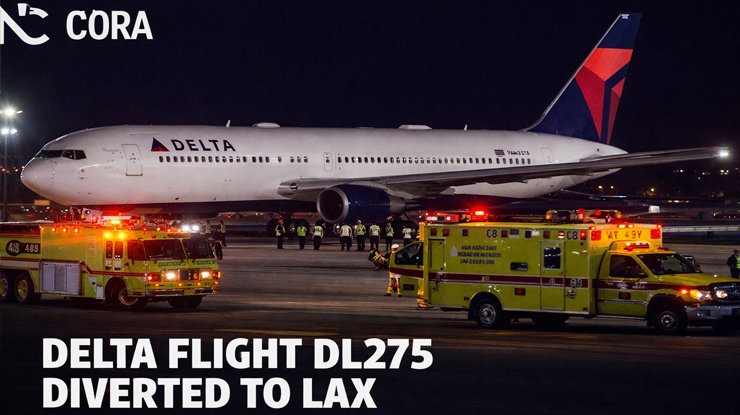
Have you ever been on a plane and wondered what happens if something goes wrong in the middle of the ocean? That is exactly what passengers on Delta Flight DL275 experienced. This flight was supposed to go from Detroit all the way to Tokyo, Japan. But it never made it. Instead, the plane turned around over the Pacific Ocean and landed at Los Angeles International Airport (LAX).
The Flight Plan: Detroit to Tokyo
Delta Flight DL275 is a long-distance international flight. It goes from Detroit Metropolitan Wayne County Airport all the way to Tokyo Haneda Airport in Japan. This is a very long journey, about 13 hours in the air. The aircraft used for this route is the Airbus A350-900, which is one of the most modern and advanced planes in the world today.
On May 27, 2025, the flight took off as planned from gate A46 in Detroit. There were 287 passengers on board, all excited and ready for their trip to Japan. Everything seemed normal at the beginning.
What Went Wrong Over the Pacific?
After flying for several hours, the plane was somewhere over the Bering Sea, which is near Alaska. At this point, the flight crew noticed something was not working correctly. The problem was with the engine anti-ice system.
Now, you might be wondering, what is an engine anti-ice system? In simple words, it is a safety system that stops ice from forming on the engines of the plane. When a plane flies at high altitude, the air is very cold. Ice can build up on important parts of the engine. If this happens, it can cause serious damage and even engine failure. So this system is very important, especially on long flights over cold oceans.
The crew noticed that the anti-ice system on one engine was not working correctly. The plane was flying at about 38,000 feet, and they were roughly 620 nautical miles southwest of Anchorage, Alaska. This is a very remote area, far from any airport.
At this point, the captain and crew had to make a big decision. Should they continue flying to Tokyo with a broken safety system? Or should they turn around and land somewhere safe?
They chose safety.
Why Did the Plane Divert to LAX?
The crew decided to divert the plane to Los Angeles International Airport, also known as LAX. But why LAX specifically? There are a few good reasons.
First, LAX is one of the biggest airports in the world. It has all the tools and equipment needed to fix an Airbus A350-900. The airport also has Rolls-Royce engine specialists available 24 hours a day. The Airbus A350 uses Rolls-Royce Trent XWB engines, so having trained specialists on hand was very important.
Second, LAX has large facilities for handling international passengers. The airport team could help passengers with customs, immigration, hotel bookings, and rebooking flights. This made it much easier to take care of 287 people at once.
After turning around, the plane flew for about 5 hours before landing safely on runway 06R at LAX. The landing was smooth, and all passengers were safe.
How Did the Crew Handle the Situation?
The flight crew on Delta Flight DL275 acted in a very professional and calm way. As soon as they noticed the problem with the anti-ice system, they followed their safety procedures step by step.
They informed air traffic control about their decision to divert. Air traffic control helped them plan a safe route to LAX. Emergency services at the airport were placed on standby before the plane arrived. This is normal practice for any unplanned diversion.
The crew also spoke to the passengers on the plane. They gave clear and honest information about what was happening and why the plane was changing direction. Passengers were understandably surprised, but they were kept informed the whole time.
When the plane landed, Delta ground staff at LAX were ready to help. They worked quickly to assist passengers with their next steps.
What Happened to the Passengers After Landing?
After landing at LAX, the 287 passengers had to figure out their next steps. Delta Air Lines worked hard to help everyone as quickly as possible.
Some passengers were rebooked on other flights to Tokyo from LAX. Others chose to fly back to Detroit and connect from there. Delta staff helped with all of this.
Under U.S. Department of Transportation rules, when a diversion happens because of a mechanical issue (which is something the airline can control), passengers have certain rights. These rights include hotel accommodation, meals, and ground transportation. Delta provided these for the affected passengers.
If any passenger felt they deserved extra compensation, they could submit a claim through Delta’s Customer Care portal within 90 days of the incident.
The Cost of the Diversion
Diverting a large international flight is not cheap. By some estimates, this single incident cost Delta Air Lines more than 2 million dollars. This includes the cost of extra fuel used to fly to LAX, hotel rooms and meals for passengers, rescheduling and rebooking flights, repairs and inspection of the aircraft, and lost revenue from the Tokyo leg of the trip.
This shows just how expensive a single mechanical problem can be. But most airlines, including Delta, agree that no amount of money is worth risking the safety of passengers and crew.
Was There a Medical Emergency Too?
Some reports also mentioned a possible medical emergency on board as another reason that helped the crew decide to divert the flight. However, the main confirmed reason remains the mechanical issue with the engine anti-ice system. Delta officially called the diversion a “precautionary measure taken out of an abundance of caution.”
What Does This Tell Us About Aviation Safety?
This story is actually a great example of how aviation safety works in the real world. Planes today are equipped with advanced systems that can detect problems early. Pilots are trained to respond quickly and correctly when something goes wrong.
The crew of Delta Flight DL275 did not wait for the problem to get worse. They acted early, followed the right procedures, and put the safety of every person on board first. That is exactly what good pilots are trained to do.
Modern planes like the Airbus A350-900 also have multiple backup systems. Even if one system fails, others can take over. This makes flying one of the safest ways to travel in the world today.
Final Thoughts
The diversion of Delta Flight DL275 was not a dramatic crash or a disaster. It was actually a success story. A problem was detected, the crew made the right decision, and 287 people landed safely. That is how the aviation system is supposed to work.
If you were one of the passengers on this flight, it was surely a stressful and tiring experience. But thanks to the quick thinking of the crew and the support of Delta’s ground teams, everyone was safe.
Next time you hear about a flight diversion, remember this story. It is not always a sign that something terrible happened. Sometimes, it is a sign that the safety system worked exactly as it should.
10 Frequently Asked Questions (FAQs)
1. What is Delta Flight DL275? Delta Flight DL275 is a long-haul international flight that travels from Detroit Metropolitan Wayne County Airport to Tokyo Haneda Airport in Japan. It uses the Airbus A350-900 aircraft.
2. Why did Delta Flight DL275 divert to LAX? The flight diverted to LAX because of a technical problem with the engine anti-ice system. This system stops ice from building up on the plane’s engines during flight, and it is very important for safety.
3. When did the diversion happen? The diversion happened on May 27, 2025, while the flight was over the Bering Sea near Alaska.
4. Were any passengers hurt? No. All 287 passengers landed safely at LAX. There were no reported injuries.
5. Why did the plane land at LAX and not a closer airport? LAX was chosen because it has the right maintenance facilities for the Airbus A350-900 and Rolls-Royce engines. It also has a large team to help international passengers with rebooking, hotels, and customs.
6. What is an engine anti-ice system? It is a safety system on an aircraft that prevents ice from forming on the engines. Ice can damage the engine at high altitudes where temperatures are very cold.
7. How long did it take to fly to LAX after turning around? After the crew decided to divert, the plane flew for about 5 hours before landing at LAX.
8. Did Delta compensate the passengers? Yes. Under U.S. DOT rules, Delta was required to provide hotel rooms, meals, and transport for affected passengers. Passengers could also file claims through Delta’s Customer Care portal.
9. How much did the diversion cost Delta? Estimates suggest the diversion cost Delta Air Lines more than 2 million dollars when including fuel, repairs, passenger care, and lost revenue.
10. Is flying still safe after incidents like this? Yes, absolutely. This incident actually shows that aviation safety systems work well. The crew detected the problem early and landed safely. Flying remains one of the safest ways to travel in the world.
Click for more amazing info. News Cora
