
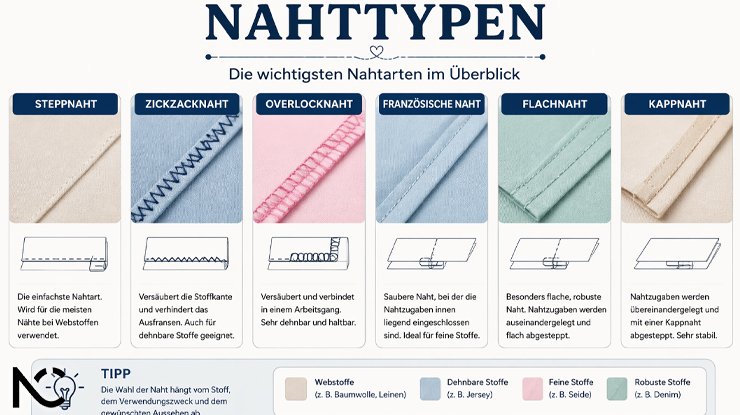
If you have ever tried sewing, you know that one of the first things you need to learn is how to join two pieces of fabric together. This is done using seams. In German, the word Nahttypen means “seam types.” Knowing the different Nahttypen is very important for anyone who wants to sew clothes, bags, home items, or any fabric project. In this guide, we will explain the most common seam types in a simple and clear way, so even beginners can understand and use them.
What Is a Seam (Naht)?
A seam is a line of stitches that holds two or more pieces of fabric together. Think of it like glue, but made from thread. Every piece of clothing you wear has seams in it. Without seams, fabric pieces would just fall apart.
The type of seam you use depends on many things, such as:
- The type of fabric you are using
- How strong the seam needs to be
- Whether the seam will be seen from the outside
- What you are making (clothes, bags, curtains, etc.)
Now let us look at the most common Nahttypen and when to use them.
1. Plain Seam (Einfache Naht)
The plain seam is the most basic and most used seam in sewing. It is the first seam that every beginner learns. To make a plain seam, you place two pieces of fabric together with the right sides facing each other. Then you sew a straight line along the edge, usually about 1.5 cm from the edge (this is called the seam allowance).
After sewing, you open the seam and press it flat with an iron. This makes the fabric lie smooth and flat.
When to use it: You can use a plain seam for almost everything, such as shirts, skirts, pillowcases, and simple bags. It is quick and easy to do.
Tip: Always finish the raw edges of a plain seam so the fabric does not fray (unravel). You can do this with a zigzag stitch or a serger machine.
READ MORE Beveu X6 Review 2026: Simple Guide to Features, Uses, and Benefits for Everyday Drinks
2. French Seam (Französische Naht)
The French seam is a very neat and clean seam. It hides all the raw edges inside the seam, so both the inside and outside of the fabric look tidy. This seam takes a little more time, but the result is very professional.
To make a French seam, you first sew the fabric with the wrong sides together. Then you trim the seam allowance, fold the fabric so the right sides are together, and sew again. This way, the raw edges are completely hidden inside.
When to use it: French seams are great for thin or light fabrics like silk, chiffon, or cotton voile. They are also good for items where the inside will be seen, such as scarves or lightweight blouses.
Tip: French seams work best with fabrics that do not fray too much and are not too thick.
3. Flat-Felled Seam (Flachnaht)
The flat-felled seam is one of the strongest seams you can make. You have probably seen this seam on jeans. It is that double row of stitching on the side of denim pants. This seam is very durable and can handle a lot of pulling and washing.
To make a flat-felled seam, you sew a plain seam first. Then you fold one seam allowance over the other and stitch it down flat. The result is a seam that is stitched on both sides and lies completely flat.
When to use it: Use flat-felled seams for heavy fabrics like denim, canvas, or workwear. It is also great for sportswear and children’s clothing that needs to last a long time.
Tip: This seam is a bit tricky for beginners, but with practice it becomes easier. Use a sharp needle and a strong thread.
4. Lapped Seam (Überlappungsnaht)
A lapped seam is made by overlapping one piece of fabric over another and then stitching them together. Unlike other seams, the fabric pieces are not placed right sides together. Instead, one sits on top of the other.
This seam is often seen on the outside of a garment and can even be used as a design feature.
When to use it: Lapped seams are often used with thick fabrics like leather, fleece, or felt, because these fabrics do not fray. It is also used in quilting and craft projects.
Tip: When working with leather or fake leather, use a special leather needle and strong thread.
5. Welt Seam (Paspolnaht)
A welt seam is similar to a lapped seam but with one seam allowance folded and stitched on top of the other. It looks like a small raised ridge on the fabric. This seam is both functional and decorative.
When to use it: Welt seams are popular in tailoring, especially for jackets, coats, and trousers. They give a garment a clean and professional look.
6. Mock French Seam (Unechte Französische Naht)
The mock French seam looks similar to a real French seam, but it is easier and faster to make. Instead of sewing the fabric twice, you fold both seam allowances inward and stitch them together. The raw edges are hidden inside, but the method is simpler.
When to use it: This seam is good for curved areas where a real French seam would be difficult to sew. It works well on light to medium weight fabrics.
7. Serged or Overlocked Seam (Overlocknaht)
If you have a serger or overlock machine, you can make a serged seam. This machine cuts and finishes the raw edges at the same time as sewing. The result is a very clean, stretchy seam that is perfect for knit fabrics.
When to use it: Serged seams are great for T-shirts, leggings, and other stretchy clothing. They are also used in ready-to-wear clothing factories because they are very fast to make.
Tip: If you do not have a serger, you can use a stretch stitch or zigzag stitch on a regular sewing machine.
8. Bound Seam (Eingefasste Naht)
A bound seam is made by covering the raw edges of a plain seam with a strip of fabric or bias tape. This gives a very neat finish on the inside of a garment. This method is often used in high-end or hand-made clothing.
When to use it: Bound seams are popular in jackets, blazers, and unlined coats. They also work well for fabrics that fray a lot.
Tip: You can use matching or contrasting bias tape to add a little decorative touch to the inside of your garment.
How to Choose the Right Nahttyp
Choosing the right seam type can feel confusing at first. Here are some simple questions to help you decide:
- What fabric are you using? Thin fabrics need gentle seams like French seams. Thick fabrics need strong seams like flat-felled seams.
- Will the inside be seen? If yes, use a French seam or bound seam for a clean look.
- Does the seam need to stretch? If yes, use a serged seam or zigzag stitch.
- How strong does the seam need to be? For things that get a lot of use, choose a flat-felled or lapped seam.
- Are you a beginner? Start with a plain seam and practice before moving on to others.
Tips for Sewing Better Seams
No matter which seam type you use, here are some helpful tips:
- Press your seams with an iron. Ironing makes seams lie flat and look professional.
- Use the right needle. Different fabrics need different needles. For example, use a ballpoint needle for knit fabrics.
- Check your thread tension. If the stitches look loose or tight, adjust the tension on your machine.
- Sew slowly on difficult areas. Curves and corners need more attention and slower stitching.
- Always do a test seam. Before sewing your project, test your stitch on a scrap piece of the same fabric.
Why Learning Nahttypen Matters
Understanding different seam types helps you make better quality projects. It also helps you fix problems when something goes wrong. For example, if a seam keeps coming apart, you might need to use a stronger seam type. If the inside of your garment looks messy, you might want to switch to a French or bound seam.
Learning Nahttypen is also a great way to improve your sewing skills step by step. You do not need to learn all of them at once. Start with the plain seam, then try the French seam, and slowly add more techniques to your skill set.
Whether you are making your first tote bag or your tenth dress, knowing which seam to use will make your work look cleaner, last longer, and feel more professional.
Final Thoughts
Learning about Nahttypen is one of the most useful things you can do as a sewer. Each seam type has its own purpose, and knowing when and how to use each one will make your sewing projects stronger, neater, and more beautiful. Start simple, practice often, and do not be afraid to try new techniques. Happy sewing!Share
Frequently Asked Questions (FAQ)
1. What does Nahttypen mean in English? Nahttypen is a German word that means “seam types.” It refers to the different ways fabric pieces can be sewn together.
2. Which seam is best for beginners? The plain seam is the best seam for beginners. It is simple, quick to learn, and can be used for many different sewing projects.
3. What is the strongest type of seam? The flat-felled seam is one of the strongest seam types. It is used in jeans and workwear because it can handle a lot of stress and washing.
4. Can I sew a French seam on a regular sewing machine? Yes, you can sew a French seam on a regular sewing machine. It does not require any special tools, just careful sewing in two steps.
5. What seam should I use for stretchy fabric? For stretchy fabric, use a serged seam (with an overlock machine) or a zigzag stitch on a regular sewing machine. These stitches can stretch with the fabric without breaking.
6. What is seam allowance? Seam allowance is the distance between the cut edge of the fabric and the line of stitching. Most sewing patterns use 1.5 cm or 5/8 inch as the standard seam allowance.
7. Why do seams fray? Seams fray when the raw edges of the fabric are not finished. To stop fraying, you can use a zigzag stitch, an overlock machine, pinking shears, or bias tape to cover the edges.
8. What is the difference between a welt seam and a lapped seam? Both seams overlap the fabric, but in a welt seam, one seam allowance is folded and stitched on top of the other. A lapped seam has one flat piece of fabric sitting over another with a single row of stitching.
9. Do I need a special machine for serged seams? A serger or overlock machine makes serged seams much easier and faster. However, if you do not have one, you can get a similar result using a zigzag stitch or a special overcast stitch on a regular sewing machine.
10. How do I know which seam type a sewing pattern uses? Most sewing patterns include instructions that tell you which seam type to use and what seam allowance to follow. Always read the pattern instructions before you start sewing.
i want same article with same word just removed sources and give me article same that you already give me and also remove this from article “—”
